Flux Beetle in Honeycomb: The World Beyond — Headlands Microfauna Entry
The Flux Beetle in Honeycomb The World Beyond — the harmless Headlands insect, what its population says about ecosystem health, and why field notes include it.
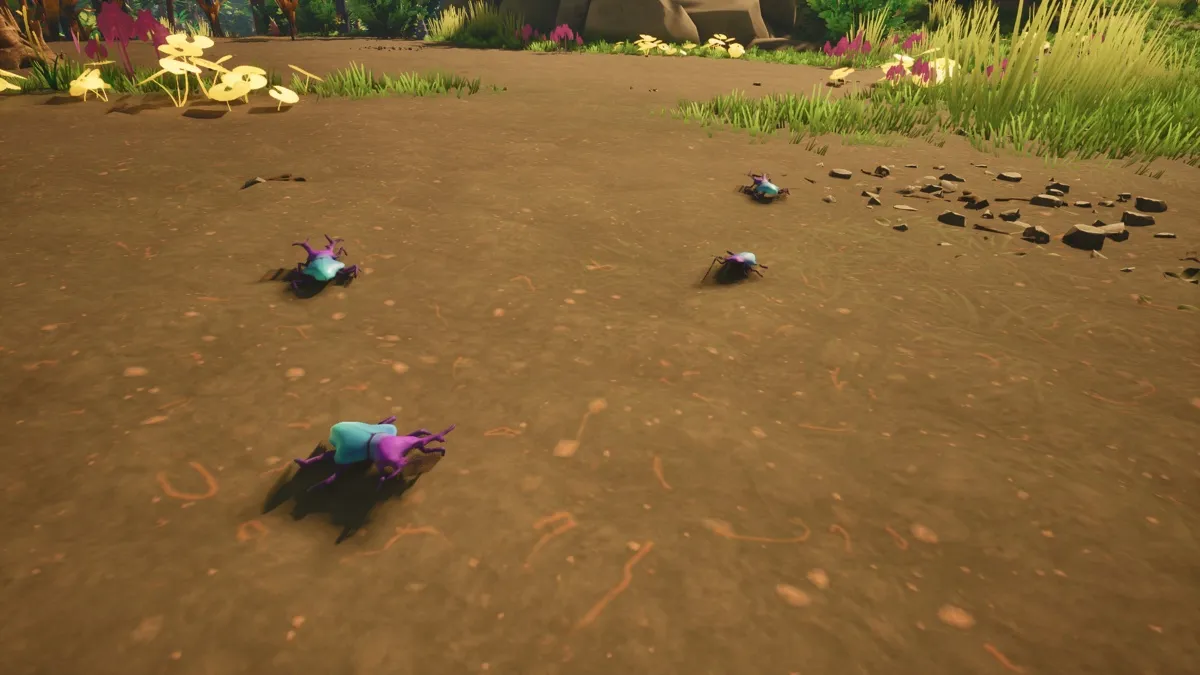
Should you even bother scanning a Flux Beetle?
Yes — and the honest framing comes straight from the official SOTA7 Field Survey Log #3: the Flux Beetle “is not going to change the course of your research on its own.” No crafting material, no hazard, no herd mechanics. What it offers instead is a low-stakes way to round out your field notes before the terrain gets serious. A complete registry is a complete registry, and the beetle is the cheapest entry you will ever add on Sota7.
What does the Flux Beetle actually tell you?
Ecology. Healthy insect populations signal a functioning ecosystem — that is the beetle’s entire job in the survey’s framing. When you document Flux Beetles across the Headlands you are not farming loot, you are reading the zone’s vital signs:
- Beetles present in an area → the local food web is supporting its base layer.
- An area oddly empty of them → worth noting in your survey log, whatever the reason.
That habit — treating small observations as data — is the same observational discipline the getting-started guide builds from your first scans onward.
Where do you find Flux Beetles?
Across the Headlands, broadly and commonly — the survey describes them as found across the zone rather than tied to a niche habitat, which distinguishes them from neighbors like the burrowing Bronze Wox or the stone-nesting Imperial Strider. Zone geography is covered in the Sota7 zones guide.
How does it compare to other “safe” entries?
The game’s friendly tier has gradations, and the beetle sits at the very bottom of effort required:
| Species | Temperament | Effort to scan | Payoff |
|---|---|---|---|
| Flux Beetle | Harmless | Trivial | Registry + ecosystem data |
| Woodback Tortoise | Docile, predictable | Low | Ecosystem insight |
| Lucuma Camilla (Valley) | Sociable, curious | Low | Wool |
The contrast is the point: every zone mixes zero-yield observation subjects with material sources. Knowing which is which before you commit a morning is most of the game’s fieldcraft.
Why the mundane entries matter on Sota7
Honeycomb’s research loop is built on cataloging an ecosystem, not on a kill list — and ecosystems include insects. The creatures hub tracks the full roster from the Valley’s mimicking grazers to the Pass’s specialized fauna like the Skittertail, and the beetle is where that roster’s philosophy is clearest: scan everything, because the boring data is what makes the interesting data interpretable.
Gallery
Related Articles
More from the field survey
guides
Honeycomb: The World Beyond Composter Guide: Biomass from Plant Matter
The Composter in Honeycomb: The World Beyond — how the Second Life quest's biomass loop works, what to feed it, and what the biomass is for.
guides
Honeycomb: The World Beyond Hoverboard Guide: Unlock, Controls & Durability
The hoverboard in Honeycomb: The World Beyond — how to unlock it, how it handles on Sota7, and how its durability scales with difficulty.
guides
Honeycomb: The World Beyond Storage & Rotting Guide: Containers & Fridges
How food rotting works in Honeycomb: The World Beyond — containers slow decay to 15%, powered fridges stop it entirely, and difficulty scales spoilage.
Was this helpful?
Thanks for the feedback!