Noon Nillow in Honeycomb: The World Beyond — Cotton-Candy Bloom of the Pass
Noon Nillow in Honeycomb: The World Beyond — the chalk-soil pink blossom with a cotton-candy scent: what its compounds do (and don't do) for researchers.
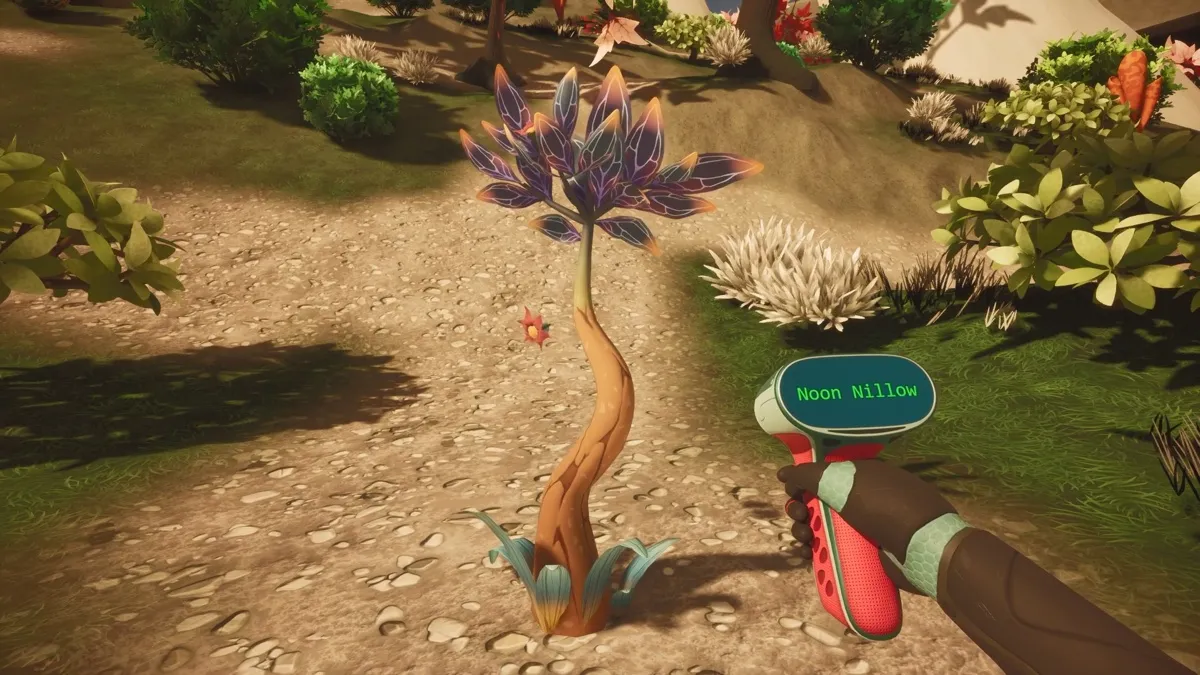
What does Noon Nillow actually do?
Almost nothing — and that is the interesting part. The official SOTA7 Field Survey Log #4 states it plainly: the Noon Nillow contains stimulating compounds, but these are fully digestible by humans and produce no effect. In a zone defined by strategic tradeoffs — the Prism Nut that costs your water, the endgame fauna worth your patience — the Pass’s prettiest plant simply refuses to be useful. Its role is largely ecological, contributing to the region’s unique atmospheric identity.
How do you recognize it?
- Small pink blossoms with a rounded structure.
- A distinctly sweet scent the survey compares to cotton candy gum.
- Chalk-rich soil underfoot — the habitat signature.
Chalk ground is your search image (zone geography: Sota7 zones guide); the scent usually finds you before the flowers do.
Why scan a plant with no mechanical value?
Three honest reasons, none of them padded:
- Registry completeness. The Pass is sparse — “species here are not abundant,” every scan counts double toward a complete survey.
- Atmosphere is content. A game that designs a scent-first flower with no buff is telling you what kind of world Sota7 is; the survey logs document it for exactly that reason.
- The pattern matters. Knowing which Pass plants are tradeoffs (Prism Nut), staples (Earth Filoy), and pure ambience (this one) is the actual field knowledge the zone tests.
Where does it sit in the wider flora picture?
The Valley’s plants fed you, the Headlands’ plants armed you, and the Pass’s plants make choices matter — with the Noon Nillow as the deliberate pause between decisions. It is also the clearest argument for the flora hub’s scan-everything doctrine: the boring entry costs seconds, completes a zone’s roster, and — as the lab systems deepen — species with “no effect” are exactly the ones that turn out to matter in combinations. Document it, smell it, move on.
Gallery
Related Articles
More from the field survey
guides
Honeycomb: The World Beyond Composter Guide: Biomass from Plant Matter
The Composter in Honeycomb: The World Beyond — how the Second Life quest's biomass loop works, what to feed it, and what the biomass is for.
guides
Honeycomb: The World Beyond Hoverboard Guide: Unlock, Controls & Durability
The hoverboard in Honeycomb: The World Beyond — how to unlock it, how it handles on Sota7, and how its durability scales with difficulty.
guides
Honeycomb: The World Beyond Storage & Rotting Guide: Containers & Fridges
How food rotting works in Honeycomb: The World Beyond — containers slow decay to 15%, powered fridges stop it entirely, and difficulty scales spoilage.
Was this helpful?
Thanks for the feedback!