Sweet Tarax in Honeycomb: The World Beyond — Valley Herb & Fiber Source
Sweet Tarax in Honeycomb: The World Beyond — the common Valley herb with curled green leaves, its food value, and the fibrous stems that feed textile crafting.
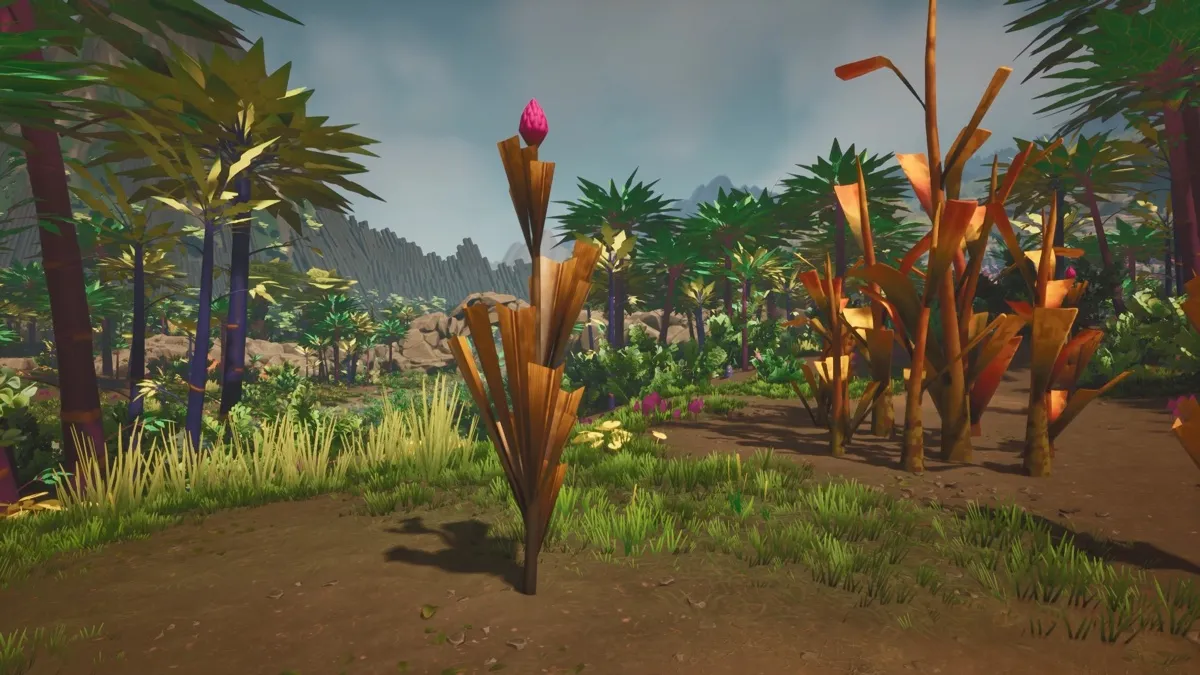
Why should you care about the plant that’s everywhere?
Because the official SOTA7 Field Survey Log #2 closes its Sweet Tarax entry with a direct warning: “Do not overlook it just because it is everywhere.” The Valley’s most common plant is also one of its most practical, and the researchers who ignore abundant species are the ones who run out of options. This is the entry point of the flora hub’s whole philosophy — scan everything, including the boring ones.
How do you identify Sweet Tarax?
Three field marks, all from the survey entry:
| Feature | Description |
|---|---|
| Leaves | Vibrant green, curled, sprouting from a rigid main stem |
| Scent | Sweet floral — noticeable before you see the plant |
| Habitat | Open spaces across the Valley |
If you have been working the clearings for Sunbeam Lumus fruit, you have already walked past Tarax — the two share the Valley’s open ground, while the riskier Ice Bonebell hides near the Red Forest’s predator nests.
What is it good for?
Two distinct yields, which is exactly why abundance shouldn’t breed contempt:
- Food. The plant is nutritious and juicy — the survey calls it “one of the more practical early finds for sustaining yourself in the field.” Where Sunbeam Lumus handles thirst, Tarax handles hunger.
- Textiles. The long, fibrous stems have “real utility beyond the kitchen, lending themselves to textile crafting as your needs grow.” That is a genuine early-game material chain from a plant that grows everywhere you already walk — and the hands-on press walkthrough (Into Indie Games, September 10, 2026) confirms the first stop: the base bed costs Textile Fiber plus one Bauxite.
How does it feed the wider research loop?
Every catalogued species opens lab possibilities — the survey’s standing rule for Valley flora — and Tarax’s combination of food value and fiber makes it a baseline ingredient species rather than a one-off pickup. The same scanning discipline you practice here scales straight into the Headlands, where plants like Cobalt Sargent reward knowing exactly where the safe picks are. For how scanning and the laboratory connect to the rest of the game, the creatures hub and getting-started guide cover the systems side.
Gallery
Related Articles
More from the field survey
guides
Honeycomb: The World Beyond Composter Guide: Biomass from Plant Matter
The Composter in Honeycomb: The World Beyond — how the Second Life quest's biomass loop works, what to feed it, and what the biomass is for.
guides
Honeycomb: The World Beyond Hoverboard Guide: Unlock, Controls & Durability
The hoverboard in Honeycomb: The World Beyond — how to unlock it, how it handles on Sota7, and how its durability scales with difficulty.
guides
Honeycomb: The World Beyond Storage & Rotting Guide: Containers & Fridges
How food rotting works in Honeycomb: The World Beyond — containers slow decay to 15%, powered fridges stop it entirely, and difficulty scales spoilage.
Was this helpful?
Thanks for the feedback!