Crossbreeding in Honeycomb: The World Beyond — Allogamy & Grafting Guide
Crossbreeding in Honeycomb: The World Beyond — allogamy and grafting in grow pods, lab requirements, and why no recipe list exists yet.
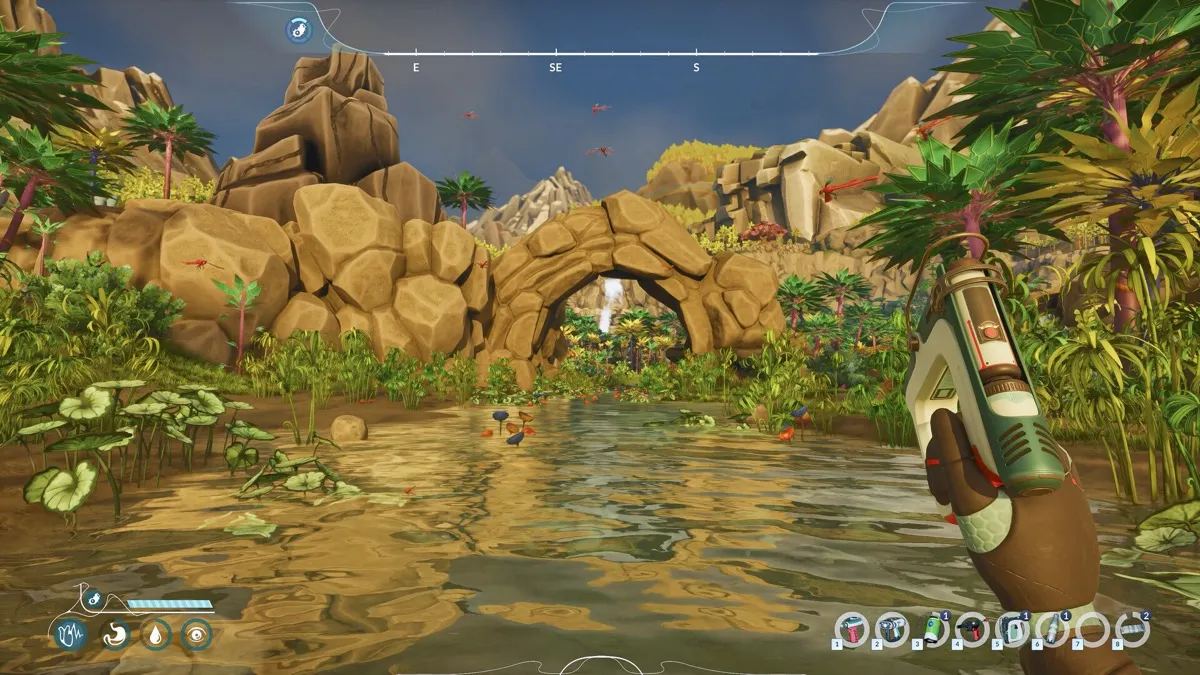
How does crossbreeding actually work?
Through two techniques the official material names explicitly: allogamy and grafting — the official press material’s phrasing is “use innovative in-game mechanics such as allogamy and grafting to create hybrids that could change the world.” The developer’s Plants Crossbreeding devlog (#9) walks through “the complex principles behind the crossbreeding mechanic, as well as requirements and limitations” that shape an experiment’s outcome, and demonstrates every step of crossing two plant species.
What each technique means, as documented:
| Technique | What it is | Where it happens |
|---|---|---|
| Allogamy | Cross-pollination between distinct plant specimens | Grow pod (community-documented) |
| Grafting | Joining tissue from one plant onto another’s rootstock | Grow pod (community-documented) |
What does the full bioengineering loop look like?
The community-documented workflow runs in four stages, and each stage has real requirements:
- Observe — scan flora and fauna until the database entry carries a name and a warning. Scanning comes first for a reason: cutting an unscanned specimen can waste rare samples.
- Extract — specialized instruments do the sampling: community documentation names chisels, secateurs, and sampling devices, each with its own job — no single tool harvests everything.
- Replicate — grow pods and lab devices duplicate collected samples, so one field find becomes a breeding population. A single leaf is not a breeding program.
- Combine — plants cross via grafting and allogamy; animal crosses are community-documented as same-species only, pushing traits like size, coat, and temperament within a family rather than mixing species.
What does a grow pod need to run?
Water, power, and a bee pipe — that combination is community-documented (one community wiki lists it, and the hands-on press walkthrough corroborates the bee-pipe as real lab equipment with its own placement rule), and it maps onto what the official material confirms separately: advanced water pumps and solar panels power the workspace (base utilities), and specialized grow pods are official base equipment (laboratory). The community adds a sharp operational warning worth repeating: a dead generator mid-graft voids the attempt — utilities are not decorative.
The pairing rule, also community-documented: two plants of the same family in one pod can cross.
Why is there no recipe list on this page?
Because no verified one exists — and we will not invent one. As of this page’s last-checked date, neither the developer’s published material nor any community wiki documents a confirmed parent-A + parent-B = hybrid-C list; at least one community wiki states outright, in its own editorial policy, that it does not guess hybrid recipes — and we hold the same line. What is officially documented is the system’s promise: hybrids — including, per the official survey logs, hybrids in the Pass that exist nowhere else on Sota7 (see the Thessalika Nango profile for the endgame framing).
The practical substitute while recipes are being mapped: experiment like the game asks you to. Community field wisdom worth adopting — log the parent plants of every attempt, treat failures as data, and change only one parent per iteration when a hybrid underperforms.
Where do you start crossbreeding?
With the plants you can already find and scan: the Valley’s Sunbeam Lumus, Sweet Tarax, and Ice Bonebell are the documented first catalog entries, and the Headlands’ processing-gated plants (Green Naga, Ebony Linter) mark where the material tier gets serious. Build the lab, keep the power on, and the flora hub index tracks every species page as the roster grows.
Source notes. Official: GamesPress crossbreeding announcement (2024-03-26), Plants Crossbreeding Devlog #9, official site feature copy. Community-documented (each fact single-site; press corroboration noted where it exists): four-stage loop, tool roster, pod requirements (bee-pipe corroborated by the hands-on press walkthrough), same-family pairing, same-species animal rule (citing a studio interview). Recipe-level combinations: no public source — verified absent, not omitted.
Related Articles
More from the field survey
guides
Honeycomb: The World Beyond Composter Guide: Biomass from Plant Matter
The Composter in Honeycomb: The World Beyond — how the Second Life quest's biomass loop works, what to feed it, and what the biomass is for.
guides
Honeycomb: The World Beyond Hoverboard Guide: Unlock, Controls & Durability
The hoverboard in Honeycomb: The World Beyond — how to unlock it, how it handles on Sota7, and how its durability scales with difficulty.
guides
Honeycomb: The World Beyond Storage & Rotting Guide: Containers & Fridges
How food rotting works in Honeycomb: The World Beyond — containers slow decay to 15%, powered fridges stop it entirely, and difficulty scales spoilage.
Was this helpful?
Thanks for the feedback!