Sunbeam Lumus in Honeycomb: The World Beyond — Fruit Tree & Thirst Fix
Sunbeam Lumus in Honeycomb: The World Beyond — where the persimmon-like fruit tree grows in the Valley, its safe raw fruit, and the thirst-versus-nutrition tradeoff.
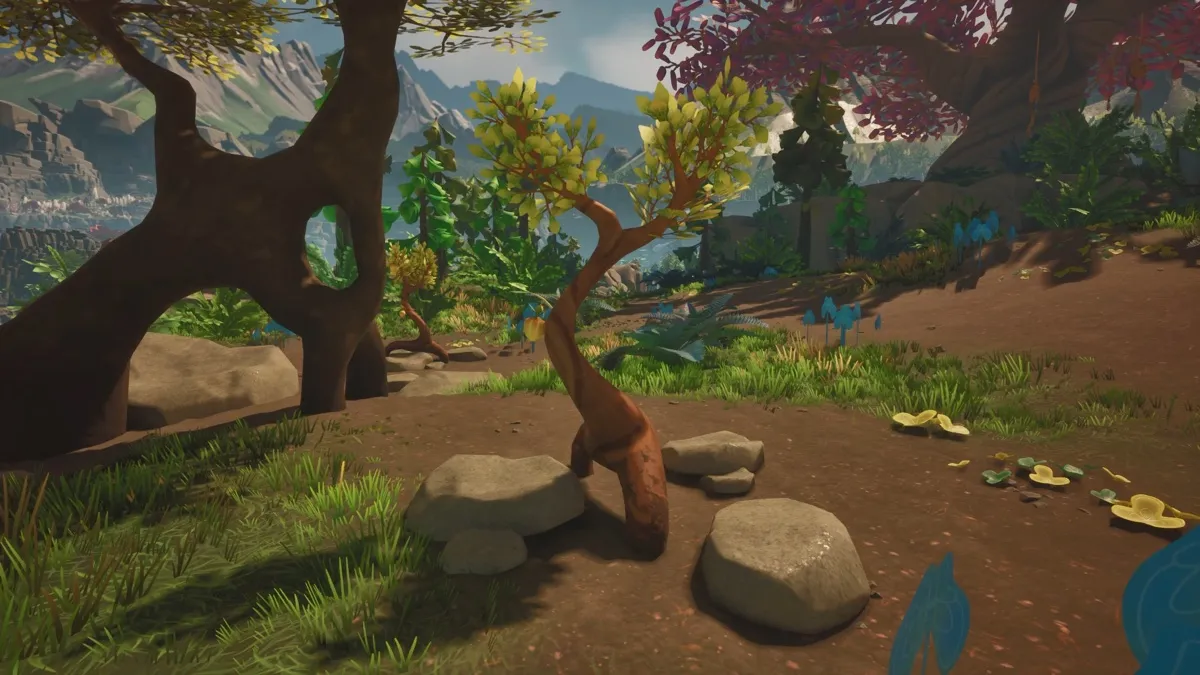
Where does Sunbeam Lumus grow?
In the open clearings of the Valley, on loam-type soil — the first zone of Sota7, low-risk and water-shaped (zone orientation lives in the Sota7 zones guide). Clearings are the search image: not deep forest, not marsh, but the bright gaps between. That placement makes it one of the first plants most researchers catalog, right alongside the Sweet Tarax herb that shares the Valley’s open spaces.
What does the fruit do?
Two effects, and the balance between them is the whole story. According to the official SOTA7 Field Survey Log #2, the fruit is:
- Sweet and juicy, with a faint resemblance to a persimmon.
- Safe to eat raw — no processing gate, unlike the Headlands’ poisonous raw crops like Green Naga.
- Reliable at quenching thirst.
- Limited in nutritional value on its own.
How should you use it in the early game?
As your hydration backbone, not your diet. The survey’s own guidance is to collect it early and often, with the honest caveat that the tree will not sustain you alone — for actual nutrition, the Valley pairs it with the nutritious Sweet Tarax herb. The log adds a note that is pure field-survey poetry: on a new planet, a tree that gives you something familiar is worth noting.
Practical loop for your first sessions, consistent with the getting-started guide:
- Route through clearings while exploring; loam soil underfoot is your cue.
- Stock fruit for thirst management between water sources.
- Do not build a food plan around it — pair it with Tarax and cooked meals.
Does it have crafting or research value?
The survey log credits Sunbeam Lumus as food and hydration, and the broader point it makes about Valley flora applies: every species you catalogue opens new possibilities in the lab, and some combinations may surprise you. Its real early-game value is cheap research data — a safe, abundant, easily scanned tree that pads your registry while you hunt riskier finds like the Ice Bonebell. The full plant roster and the crossbreeding systems it feeds are cataloged on the flora hub.
Gallery
Related Articles
More from the field survey
guides
Honeycomb: The World Beyond Composter Guide: Biomass from Plant Matter
The Composter in Honeycomb: The World Beyond — how the Second Life quest's biomass loop works, what to feed it, and what the biomass is for.
guides
Honeycomb: The World Beyond Hoverboard Guide: Unlock, Controls & Durability
The hoverboard in Honeycomb: The World Beyond — how to unlock it, how it handles on Sota7, and how its durability scales with difficulty.
guides
Honeycomb: The World Beyond Storage & Rotting Guide: Containers & Fridges
How food rotting works in Honeycomb: The World Beyond — containers slow decay to 15%, powered fridges stop it entirely, and difficulty scales spoilage.
Was this helpful?
Thanks for the feedback!