Ebony Linter in Honeycomb: The World Beyond — Pebble Grain Crafting Crop
Ebony Linter in Honeycomb: The World Beyond — the wetland crop with pebble-like dark grains: poisonous raw, structural backbone for durable gear recipes.
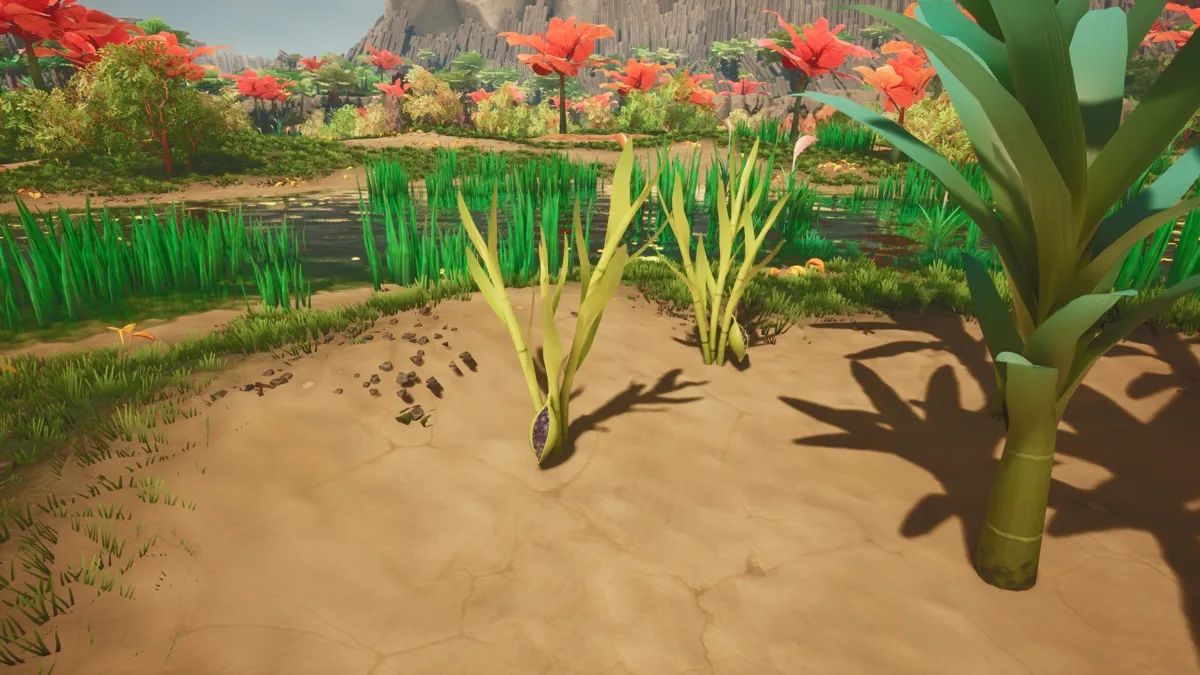
What is Ebony Linter used for?
Structural integrity — that is the survey’s exact term. Handled correctly, Ebony Linter “provides the structural integrity needed for refined recipes and high-durability gear as you push into more demanding territory.” Where the Valley’s plants fed you (Sunbeam Lumus, Sweet Tarax) and its own zone-mate Green Naga feeds recipes, Ebony Linter is the Headlands’ materials plant: the reason a foraging run becomes a gear upgrade.
What does it look like?
Picture pebbles on a plant. The official SOTA7 Field Survey Log #3 describes dark, smooth grains that grow in clusters and carry a passing resemblance to pebbles, with a bitter, starchy quality similar to a pea pod. It is a fruit-bearing crop of the wetlands, marshes, and lakes, sharing that water network with Green Naga — the zone’s two wetland picks, and both poisonous raw.
Why does the raw warning matter so much here?
Because Ebony Linter looks the least like food of anything you have gathered so far, and the game will still let you make the mistake. The survey is blunt: “Like the Green Naga, it is poisonous when consumed raw, so processing is not optional.” The Headlands’ food-safety hierarchy is a three-plant exam:
- Green Naga — arrow-stemmed marsh herb, poisonous raw.
- Ebony Linter — pebble grains, poisonous raw, processing mandatory.
- Cobalt Sargent — the safe one; tea, not gear.
How does it fit the Headlands progression?
The zone is classified mixed danger, “recommended for experienced field teams” (zones guide), and its design philosophy is visible right here in this plant: abundance behind a discipline gate. Gather freely, process always, and the output — durable-gear recipes — is exactly what the Pass will assume you have. The flora hub tracks the full progression chain from Valley staples to endgame strategic resources like the Prism Nut.
Gallery
Related Articles
More from the field survey
guides
Honeycomb: The World Beyond Composter Guide: Biomass from Plant Matter
The Composter in Honeycomb: The World Beyond — how the Second Life quest's biomass loop works, what to feed it, and what the biomass is for.
guides
Honeycomb: The World Beyond Hoverboard Guide: Unlock, Controls & Durability
The hoverboard in Honeycomb: The World Beyond — how to unlock it, how it handles on Sota7, and how its durability scales with difficulty.
guides
Honeycomb: The World Beyond Storage & Rotting Guide: Containers & Fridges
How food rotting works in Honeycomb: The World Beyond — containers slow decay to 15%, powered fridges stop it entirely, and difficulty scales spoilage.
Was this helpful?
Thanks for the feedback!