Ice Bonebell in Honeycomb: The World Beyond — Healing Bloom Near Nests
Ice Bonebell in Honeycomb The World Beyond — the Red Forest's translucent healing flower, why it grows near predator nests, and how to gather it safely.
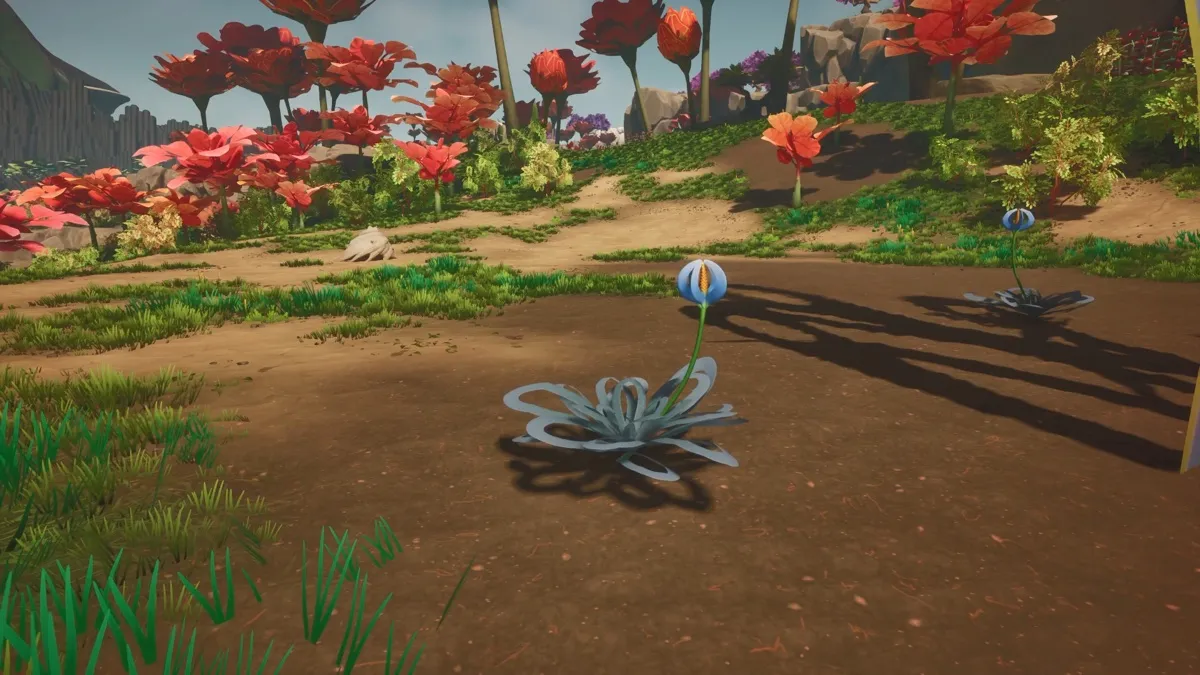
Where does Ice Bonebell grow — and why is gathering it risky?
In the Red Forest, and the catch is in the official survey’s own words: Ice Bonebell is “often growing close to predator nests, which makes collecting it an exercise in patience and situational awareness.” The Valley’s one hostile species, the Scorchweaver, holds the zone’s undergrowth — so this healing plant sits exactly where the danger is. The flora hub rates it the Valley’s risk/reward pick for a reason.
Gathering routine that respects the terrain (zone layout in the Sota7 zones guide):
- Scout the Red Forest edge before entering; note nest-looking cover.
- Approach from angles that keep an exit route open.
- If a larger shape moves in the undergrowth, leave — no bloom is worth testing what the Valley’s one hostile species does at close range.
What does it look like?
Unmistakable, per the SOTA7 Field Survey Log #2: petals with the appearance of carved ice, pale and almost translucent — “one of the more visually striking finds in the Valley.” Against the Red Forest’s palette it reads almost luminous, which cuts both ways: it is easy to find, and the same open ground that shows you the bloom is what you cross to reach it.
What does it do?
- Bitter to the taste — this is not a snack like Sunbeam Lumus fruit.
- Carries a minor healing effect — the payoff, and the reason it is worth the approach discipline.
That makes it the Valley’s first healing option: not strong, not pleasant, but early — and gathered with awareness rather than luck. Food and thirst come easier (Sunbeam Lumus, Sweet Tarax); healing comes with risk.
Is the risk worth it early on?
Yes, once you have the observation habits down — the survey itself calls Ice Bonebell “a practical early find despite the risk involved in reaching it.” The plant doubles as a behavior test: if you can read the undergrowth, approach from cover, and disengage cleanly, you are ready for what the Headlands asks next, where even the food plants bite back (Green Naga is poisonous raw). Learn the lesson here, where the threats are small and backing out is easy.
Gallery
Related Articles
More from the field survey
guides
Honeycomb: The World Beyond Composter Guide: Biomass from Plant Matter
The Composter in Honeycomb: The World Beyond — how the Second Life quest's biomass loop works, what to feed it, and what the biomass is for.
guides
Honeycomb: The World Beyond Hoverboard Guide: Unlock, Controls & Durability
The hoverboard in Honeycomb: The World Beyond — how to unlock it, how it handles on Sota7, and how its durability scales with difficulty.
guides
Honeycomb: The World Beyond Storage & Rotting Guide: Containers & Fridges
How food rotting works in Honeycomb: The World Beyond — containers slow decay to 15%, powered fridges stop it entirely, and difficulty scales spoilage.
Was this helpful?
Thanks for the feedback!