Sota7 Zones Guide: The Valley, The Headlands & The Pass
Every confirmed Sota7 zone in Honeycomb: The World Beyond — the Valley, Headlands and Pass, with official risk ratings from the field survey logs.
FAQ
How many zones does Sota7 have?
Which zone do you start in?
Is the Pass the final zone?
Are the zones open world or gated?
When will this page be verified against the real game?
How many zones does Sota7 have?
Three zones have been named in the official Sota7 Field Survey Logs, the zone-preview series developer Frozen Way published on Steam news ahead of launch: the Valley, the Headlands, and the Pass. The series opened on August 4, 2026 with the line that “Sota7 is not one environment” — a deliberate hint that the surveyed three may not be the whole planet once the game is live.
| Zone | Survey log | Official classification | Terrain highlights |
|---|---|---|---|
| The Valley | August 11, 2026 | Low risk — initial orientation | Forests, groves, marshlands shaped by water |
| The Headlands | August 25, 2026 | Mixed danger — experienced field teams | Stone formations, constructed remnants |
| The Pass | September 3, 2026 | Extreme risk — end-of-progression zone | Small area condensing the surrounding biomes |
The logs frame each region like an EON Corp risk assessment, which matches how the game paces survival pressure: gentle cataloguing first, real preparation later. Read them alongside our world hub for the planet’s broader picture.
The Valley — where every expedition begins
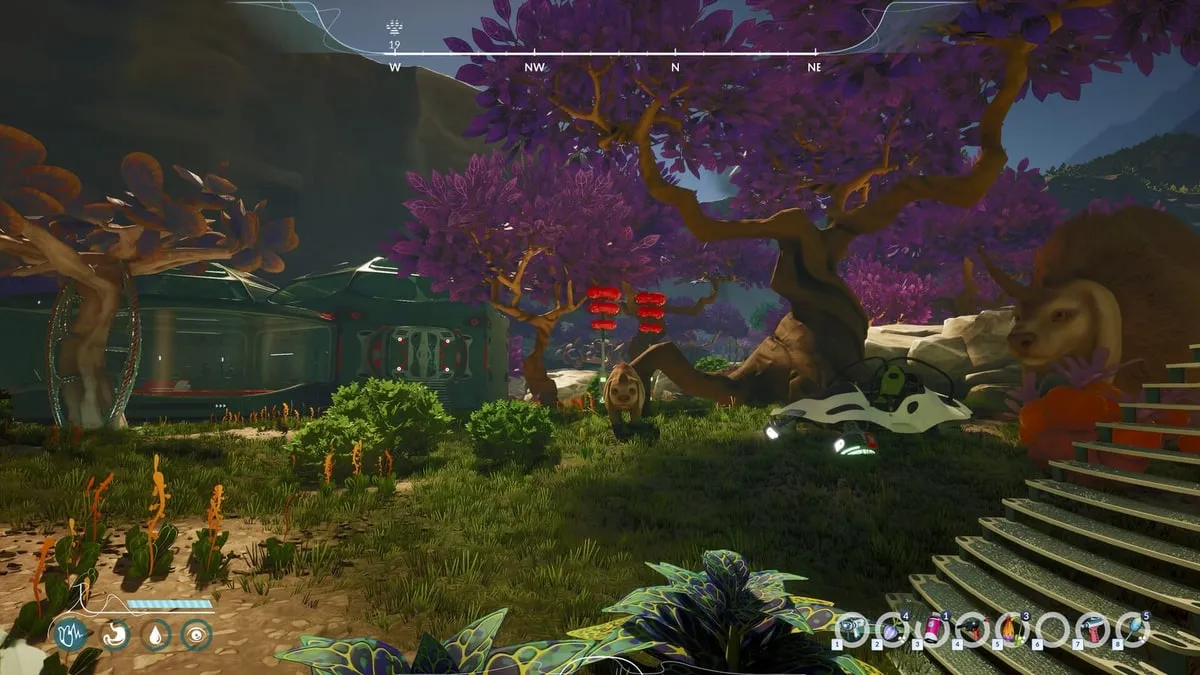
The Valley is the first playable zone, classified low risk and “recommended for initial orientation” in the August 11 survey log. Its forests, groves, and marshlands are shaped by water, making it the region where the opening hours unfold — the gentlest introduction the survey’s orientation classification promises.
Water is the defining force here: streams and marshes carve the terrain and gather the planet’s early flora and fauna into studyable clusters — a landscape built for first cataloguing runs, not for testing your limits. The Valley’s surveyed fauna each have a full profile: Lucuma Camilla, Wild Green Zuma, Gum Nibis, and the zone’s one hostile species, the Scorchweaver. Its plants do too: Sunbeam Lumus, Sweet Tarax, and the risk-reward Ice Bonebell.
The Headlands — mixed danger for experienced teams
The Headlands, previewed in the August 25 log, carry a mixed-danger classification “recommended for experienced field teams.” Stone formations and constructed remnants shape its terrain — and “constructed” is the survey’s first overt hint that something was built on Sota7 before your expedition.
This is the zone where the survey’s tone shifts from orientation to preparation: the risk rating implies survival preparation starts mattering in earnest. The surveyed residents are profiled in full: the Imperial Strider, pack-hunting Bronze Wox, the docile Woodback Tortoise, and the harmless Flux Beetle. On the plant side, Green Naga and Ebony Linter are poisonous raw, while Cobalt Sargent is the zone’s safe tea herb.
The Pass — the extreme-risk endgame zone
The Pass is the final zone previewed before launch, in the September 3 log, and it carries the harshest rating: extreme risk, described outright as an “end-of-progression zone.” It is a small area that condenses the surrounding biomes — the survey’s phrasing implies this is where a fully upgraded toolkit and crossbreeding results face their hardest test.
End-of-progression does not necessarily mean the end of the game — it means the top of the risk ladder the survey series has been climbing. The Pass’s sparse, high-value fauna is documented across three profiles: the gentle Azurite Lonebid, the armored Thessalika Nango, and the ubiquitous Skittertail. Its flora is equally deliberate: staple Earth Filoy, the thirst-costing Prism Nut, and the purely scenic Noon Nillow. What the Pass condensing “the surrounding biomes” actually looks like, and what it rewards, is a verification item we are working through in the live game.
What we are verifying in the live game
Everything above is sourced from official pre-release material, which means a handful of questions stay open as we re-verify against the live game:
- Full zone count — community documentation (September 2026) describes a fourth, aquatic zone beyond the three surveyed; official logs name only the Valley, Headlands, and Pass, so we treat the aquatic zone as community-documented until official material names it
- Officially named locations — the launch-week patch notes (September 10–11) name places outside the survey-log set: Hotfix #2 added an ambient sound zone at the Amberland landmark, and Hotfix #3 reworked animal navigation around aquatic areas, rivers, and the market. None of these is classified into a zone by official material; the aquatic-area rework is consistent with the community-documented aquatic zone but is not an official confirmation
- Zone gating — open traversal versus mission-gated progression: still unverified — no public source, official or community, documents the gating rules
- Fast travel — still unverified; the documented transport is the hoverboard (official) and a hover buggy (community-documented), both terrain vehicles rather than fast travel
- Screenshot-to-zone mapping — official screenshots are not labeled by zone, so image assignments on this page are marked as comparisons, not confirmed locations
Each verified answer becomes its own location page under this hub, and every page carries its last-checked date. To catch up on everything else around launch, see the launch guide; for the systems you will use inside these zones, the flora & crossbreeding hub and creatures field guide are the references.
More from this wiki
Gallery
Related Articles
More from the field survey
guides
Honeycomb: The World Beyond Composter Guide: Biomass from Plant Matter
The Composter in Honeycomb: The World Beyond — how the Second Life quest's biomass loop works, what to feed it, and what the biomass is for.
guides
Honeycomb: The World Beyond Hoverboard Guide: Unlock, Controls & Durability
The hoverboard in Honeycomb: The World Beyond — how to unlock it, how it handles on Sota7, and how its durability scales with difficulty.
guides
Honeycomb: The World Beyond Storage & Rotting Guide: Containers & Fridges
How food rotting works in Honeycomb: The World Beyond — containers slow decay to 15%, powered fridges stop it entirely, and difficulty scales spoilage.
Was this helpful?
Thanks for the feedback!